Water Treatment
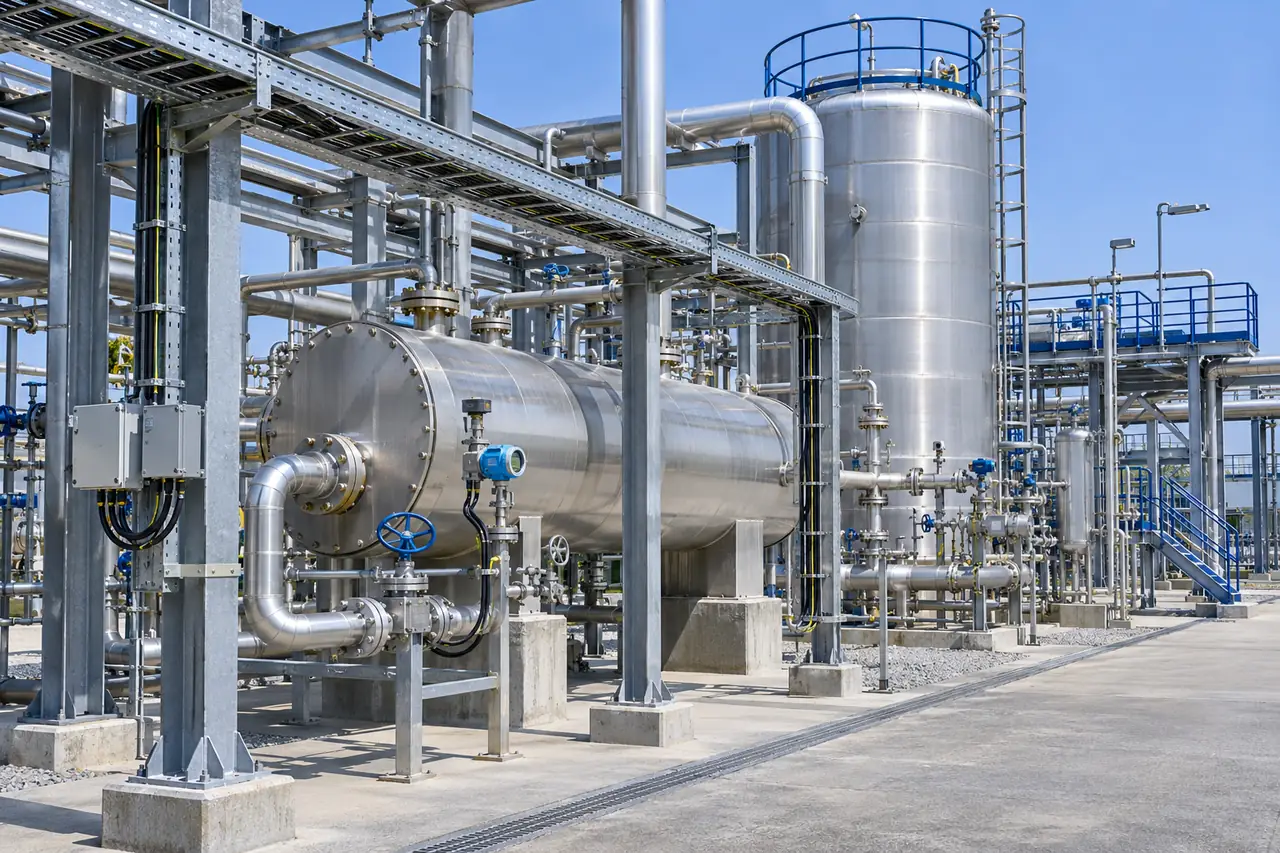
Treatment works use mains cables for plant distribution, flexible power cables for pump connections and screened signal pairs for measurement. Wet areas and submerged runs call for different sheath and installation properties.

Cable Application
Prysm Cable supplies PAS5308 instrument pairs for field measurements, armoured LSZH instrumentation for protected plant routes, and separate auxiliary mains and temperature-instrument cable ranges.
Application Detail
Treatment works use mains cables for plant distribution, flexible power cables for pump connections and screened signal pairs for measurement. Wet areas and submerged runs call for different sheath and installation properties.
Process units use armoured distribution, screened instrumentation loops and separate emergency circuits. Outdoor exposure, oil contact and fire performance affect different parts of the cable construction.
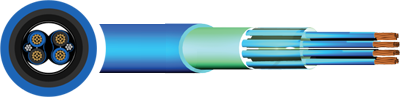 PAS5308 Part1/Type1 Instrumentation Cable, Individually Screened - LSZH
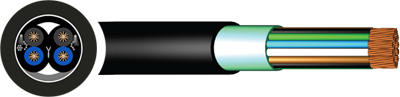 PAS5308 Part1/Type1 Instrumentation Cable, Overall Screened
Individual- and overall-screened PAS5308 Type 1 cables for field instrument loops, with LSZH or PVC sheath options in the named products.
PAS5308 Type 2 LSZH instrumentation combines individual and collective foil screens with galvanised steel-wire armour.
A BS4937 compensating and thermocouple cable range for temperature-instrument connections. The required sensor type and conductor alloy identify the appropriate variant.
BS6724 armoured LSZH mains for fixed plant-service power, separate from the instrument signal cables.
Application Detail
An overall screen encloses the complete bundle; individual screens add separation between its pairs. Several low-level analogue loops sharing a cable can therefore call for individual screening even when the route already has an overall shield.
The Type 2 construction adds steel-wire armour to the screened pair assembly. That is useful when the instrument route calls for mechanical protection as well as signal screening. The armour, screen connections and any hazardous-area system requirements still belong to their respective installation designs.
Application Detail
View specifications or add cables to your enquiry.
300/500 Volts · LSZH
LSZH-sheathed instrumentation cable with a separate screen around each PE-insulated copper pair. Each pair has a 0.5 mm² drain wire, providing individual screen connections for the 300/500 V…
300/500 volts · Polyvinyl Chloride (PVC)
Overall-screened PAS 5308 Part 1 Type 1 cable for measurement and control signals. PE-insulated copper conductors share an aluminium/Mylar tape screen with a 0.5 mm² drain wire beneath…
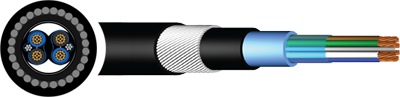
300/500 Volts · Low Smoke Zero Halogen (LSZH)
Armoured instrumentation cable for measurement and control signals between field instruments, junction boxes and control panels. Each PE-insulated pair has a foil screen, and a collective screen surrounds…

Polyvinyl Chloride (PVC)
Non-armoured BS 4937 range for thermocouple-extension and compensating-cable enquiries. PVC insulation and sheath are combined with an overall foil screen.
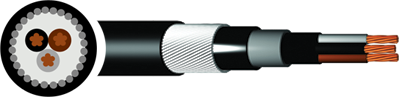
600/1000 Volts · Low Smoke Zero Halogen (LSZH)
Armoured copper mains cable for fixed 600/1000 V distribution circuits requiring LSZH bedding and sheath. The BS 6724 range combines XLPE insulation and steel-wire armour in sizes from…
Product Data
Print a product summary or download its listed construction and technical data as CSV.
Application Detail
An overall screen surrounds the complete group of pairs. Individual screens surround each pair, helping reduce coupling between circuits inside the cable. For several low-level analogue loops sharing one cable, the pair-by-pair separation can be the important difference. A screen around the outside cannot provide the same internal boundaries.
Read MoreA building specification can require XLPE insulation and LSZH bedding and sheath in the same cable. XLPE describes the insulation around the conductor; LSZH describes smoke and halogen-related characteristics. An XLPE/PVC cable therefore meets a different material requirement from an XLPE/LSZH cable.
Read More