EV Charging & E-Mobility
Fixed charging points can use separate power and data runs or a hybrid cable that carries both. The cable supplying a charge point and the flexible lead connected to a vehicle serve different installation duties.

Cable Application
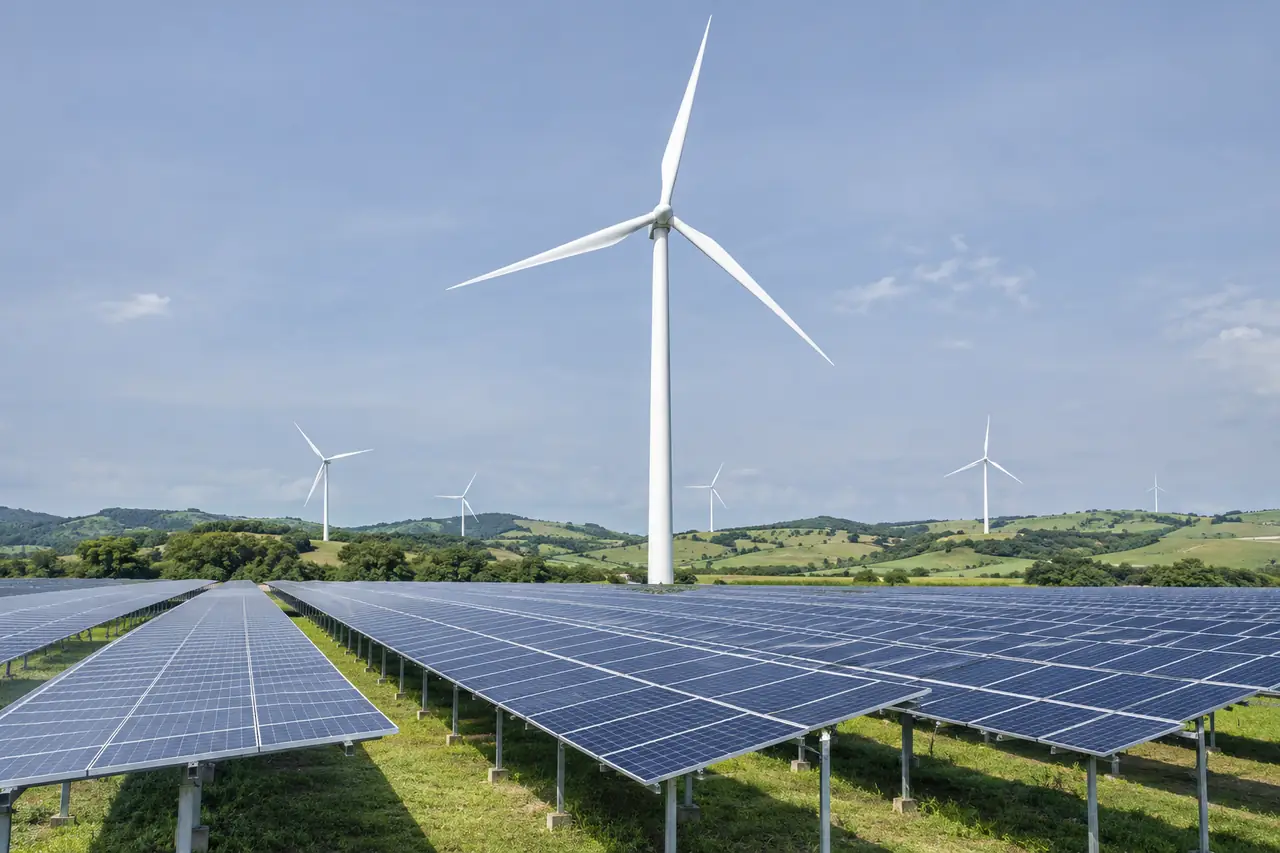
From solar array wiring to plant-network feeders, auxiliary power and monitoring, Prysm Cable offers separate cable ranges for each connection. The PV cable and the 33 kV feeder serve different positions in the installation.
Application Detail
Fixed charging points can use separate power and data runs or a hybrid cable that carries both. The cable supplying a charge point and the flexible lead connected to a vehicle serve different installation duties.
Solar arrays use dedicated PV string connections. Inverter outputs, collector circuits and substations use separate distribution cables, with construction and voltage chosen for each part of the installation.
EN50618 PV cable for panel and array connections, with flexible Class 5 tinned copper and cross-linked halogen-free insulation and sheath.
BS7870 19/33 kV aluminium service cable for the plant’s medium-voltage distribution connection, with XLPE insulation, copper-wire screening and an MDPE sheath.
BS6724 armoured LSZH mains for fixed auxiliary power, rated 600/1000 V.
PAS5308 individually screened LSZH pairs for measurement connections between monitoring equipment and the control system.
Application Detail
A longer string run can require a larger conductor to control voltage drop. The chosen size has to fit the connector contact, and the finished outside diameter has to fit its cable seal. The PV cable’s DC voltage designation also needs to match the array’s maximum conductor-to-conductor and conductor-to-earth voltages.
Monitoring loops can run through electrically noisy plant areas. Individual screens separate the pairs within the cable; their terminations and grounding follow the monitoring-system design. This is a signal requirement, distinct from the mechanical armour used on an auxiliary power feeder.
Application Detail
View specifications or add cables to your enquiry.
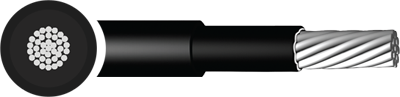
600V-1000V AC, 1800V DC · Cross-linked halogen-free compound
Solar PV cable for the DC wiring between panels and array equipment. The flexible Class 5 tinned-copper conductor helps route connections at the modules, with cross-linked halogen-free insulation…
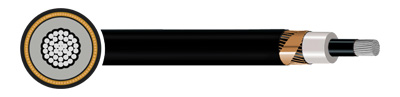
Uo/U 19kV/33kV · Medium Density Polyethylene (MDPE)
Single-core aluminium cable for the 19/33 kV distribution network of a renewable-energy installation. XLPE insulation, a copper-wire screen and an MDPE sheath form the BS 7870 construction.
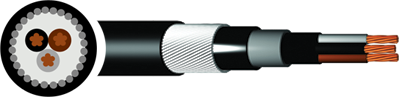
600/1000 Volts · Low Smoke Zero Halogen (LSZH)
Armoured copper mains cable for fixed 600/1000 V distribution circuits requiring LSZH bedding and sheath. The BS 6724 range combines XLPE insulation and steel-wire armour in sizes from…
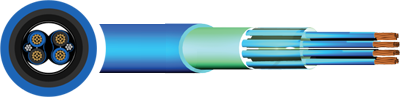
300/500 Volts · LSZH
LSZH-sheathed instrumentation cable with a separate screen around each PE-insulated copper pair. Each pair has a 0.5 mm² drain wire, providing individual screen connections for the 300/500 V…
Product Data
Print a product summary or download its listed construction and technical data as CSV.
Application Detail
The two figures describe different electrical stresses: 6.35 kV from conductor to earth and 11 kV between phases. They are the U₀/U rating. A higher voltage used during a cable test is a separate test condition, not permission to operate that cable continuously on a higher-voltage network.
Read MoreA building specification can require XLPE insulation and LSZH bedding and sheath in the same cable. XLPE describes the insulation around the conductor; LSZH describes smoke and halogen-related characteristics. An XLPE/PVC cable therefore meets a different material requirement from an XLPE/LSZH cable.
Read More